


The Plight of Pollinators in Minnesota
- Bri Allen
- Sep 3, 2017
- 7 min read
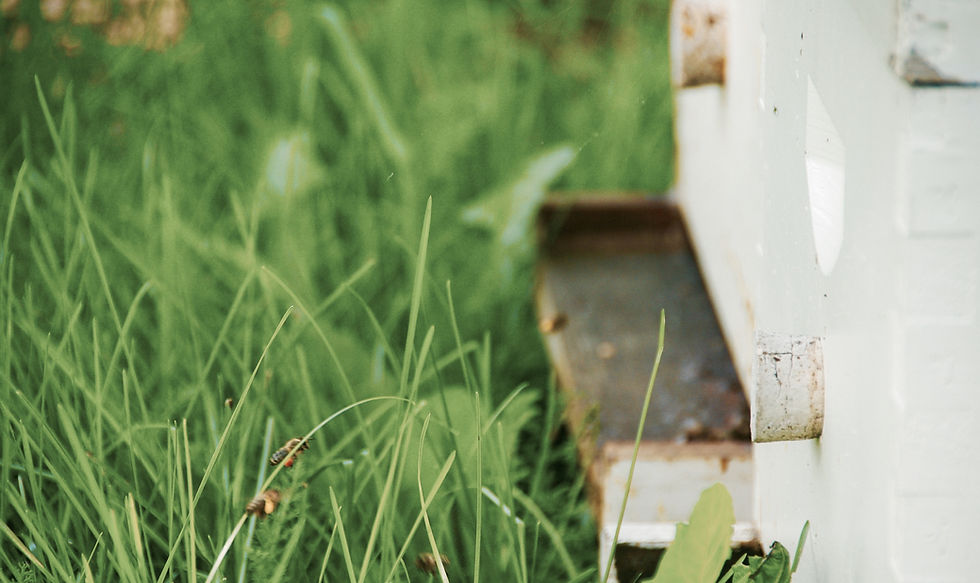
Sitting in my yard with a cold cup of lukewarm coffee, slippers kicked off on the concrete, I gaze into the deep unfolding mystery of the hostas tangled around the deck. A slow-vibrating dopey bee tumbles out of a purple flower bell in my sight-line, seemingly tipsy on pollen it is filling its legs with. I remember how I often think about bees, mostly because my fifth-grade teacher and also my personal hero for two years, wore a thick golden brooch depicting a proud gilded bumble bee. She said she like to remember the miracle of the flight of bumble bees. I liked bees because she liked bees. Never would my fifth-grade self ever think to imagine a future world where bees don’t exist, where thick golden bumble-bee brooches depict a fantastical extinct creature...
The bees are dying. Nation-wide,continent wide, world-wide a group of species vital to the abundant food supply we enjoy, is plummeting into endangerment. The Twin Cities of Minnesota, where I live, is facing this grim truth along with the rest of the world. The State Governor has not only publicly acknowledged this as a problem, but issued an executive order to restore the health and numbers of pollinators. This environmental issue may seem passe, when it in fact remains extremely dire. The looming threat would mean heavy hits to the economy and food-system we have grown accustomed to. In response, there is a growing number of informed homeowners, businesses, and schools in Minneapolis and St. Paul implementing strategies such as planting native plants to attract pollinators, moderating use of pesticides that threaten pollinators, and small-scale bee-keeping in order to encourage a healthy pollinator population, in addition to state wide education initiatives and opportunities.
In 2006, honey bee losses came into public attention after beekeepers reported losing between 20 and 90 percent of their colonies (Minnesota State Agency Pollinator Report, 2017, p. 4). The phenomenon has continued to the present day and is surrounded by a shroud of mystery. A great number of factors combine to influence population decline and endangerment across pollinator species. Hobbyist beekeeper of Columbia Heights (just north of the Twin Cities), Steve Hudak shared his personal experience losing honey bees: “Last year both my hives swarmed at the end of the season, they were just gone.” When asked what he meant by “swarm”, he explained, “the queen gets upset and leaves and the bees follow…I don’t know for the life of me why they took off” (August 30, 2017, Personal Interview). Steve is not alone in this experience with 44,784 colonies in Minnesota reported lost to the Bee Informed Partnership, in the winter of 2015-2016 (Minnesota State Agency Pollinator Report, 2017, p. 4).
Unfortunately, the honey bee is just one example of many species in the State of Minnesota under threat. “Minnesota’s State Wildlife Action Plan lists 33 species of butterflies and moths and 5 species of bumble bees as ‘Species in Greatest Conservation Need.’ Several of these species are also listed or being considered for listing under the federal Endangered Species Act” (Minnesota State Agency Pollinator Report, 2017, p. 5). The list of threatened species includes the iconic monarch butterfly which has seen an 80 percent decline in population since the 1990s.
Mark Dayton, the Governor of Minnesota issued the aforementioned executive order in August 2016 directing a team of state agency experts to take immediate action to restore pollinator health in the state (Minnesota State Agency Pollinator Report, 2017, preface). In a letter to the public, Dayton urges readers to consider the damage to the $90 billion agricultural sector should pollinator numbers continue to plummet. Both the Pollinator Report and Hudak mentioned how severely limited food options become when pollinators disappear. Think about the average produce section in a grocery store. Imagine as the numbers of pollinators dwindles, losing everyday items such as apples, blackberries, lettuce, cucumbers, kale, broccoli, avocados, and raspberries, just to name a few. It is estimated a third of our food supply would disappear with the pollinators. (Loria, 2017)

Felker, W. (2015). Baskets of berries. Los Angeles CA
Since the executive order, the state of Minnesota has formed a collaborative of committees and education initiatives, in addition to generating much needed research on the topic of pollinator preservation. One result has been a much clearer understanding of what is actually at the root of the problem which consists of “habitat loss, habitat degradation, climate change, pesticide exposures, diseases and parasites affect pollinators. The impacts intensify when these factors combine with each other” (Minnesota State Agency Pollinator Report, 2017, p.6). A couple in Columbia Heights (a northern suburb of the Twin Cities), Dave and Louise spoke to me about their experience converting large portions of their yard to native plants. When I asked if lots of people were doing this type of thing they said, “Yes, several of our neighbors and there is this group called the Wild Ones..." Louise explained the Wild Ones as a club of folks who meet and work to convert their yards into native plant havens for pollinators. The Wild Ones website slogan reads "Healing the earth one yard at a time." These projects do not happen without resistance. Louise also described run-ins with her neighbors over the native plants, "we have had some issues at our Minneapolis house with the native plants because our garden doesn’t fit in with ‘peonies and roses.’” She talked of how while they are plugged into a network of people doing this type of work, there are still many others who don't see the value and perceive the native plants as ugly pests which don't fit into an ideal yard aesthetic.
Another problematic factor which faces the bee populations of Minnesota specifically, is poor management of hives. When bees contract diseases or parasites due to negligent bee-keeping practices they can and will quickly transmit the deadly problems onto neighboring bees. Bee keeping is an increasingly trendy hobby. Hudak got into it “before it was cool,” he says, “now it’s the buzz of the week,” and if he could give any advice to those who are looking to keep bees it is to understand the time, equipment, and financial investment necessary and to “take the class, take the class, take the class!” He recommended what he called the Arboretum, the offshoot which offers classes being formally known as The Tashjian Bee and Pollinator Discovery Center. According to the reputable center’s website it “serves as a hub for community outreach and education that is grounded in the world-renowned bee research of University of Minnesota Scientist Marla Spivak, Ph.D.” (Tashjian Bee and Pollinator Discovery Center).
Understanding the factors contributing to pollinator collapse, how they interact, and most importantly, how to solve them is a core focus of the communities mobilizing around this issue in the state of Minnesota. The Interagency Pollinator Protection Team has outlined three main goals which they are already working towards. Goal number one reads: “Lands throughout Minnesota [will] support healthy, diverse, and abundant pollinator populations” (Minnesota State Agency Pollinator Report, 2017, p.10). The Department of Transportation has been incorporated and involved in this goal by using native seed mixes that were developed to be made available to local government units on 36 percent of its project areas between 2010 and 2015 (Minnesota State Agency Pollinator Report, 2017, p.12). The percentage translates into 2,709 acres of pollinator-friendly habitat.
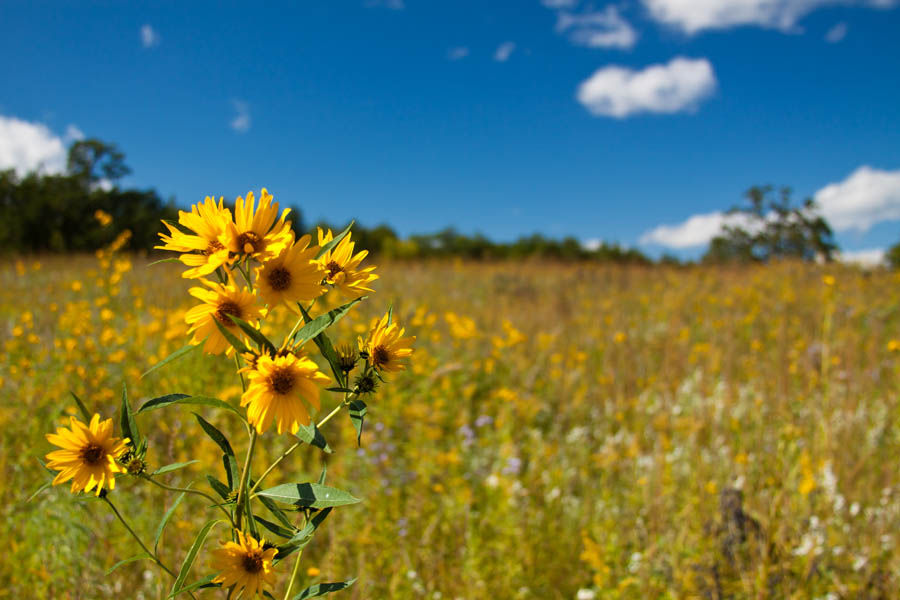
(unknown photographer/date) source: Minnesota Landscape Arboretum webpage
The second goal tackles the problem of pesticides prophesying: “Minnesotans [will] use pesticides judiciously and only when necessary, in order to reduce the harm to pollinators from pesticides while retaining economic strength” (Minnesota State Agency Pollinator Report, 2017, p.16). This particular goal requires cooperation and coordination with the agricultural community which is a huge sector of Minnesota’s economy and relies heavily on the use of pesticides. The primary steps towards this goal involve monitoring and regulating the volume of pesticide used throughout the state and ensuring the administering of pesticides follows a strict set of rules which prioritize the health of pollinators.
The third and final goal outlined by the Interagency Pollinator Protection Team involves the general public as a whole and aspires for “Minnesotans [to] understand, value, and actively support pollinator populations” (Minnesota State Agency Pollinator Report, 2017, p.20). Within this section of the annual report is referenced the same Tashjian Bee and Pollinator Discovery Center Steve the beekeeper took his classes from as a starting point for learning about local pollinators. It is one of many possible venues that offer comprehensive pollinator education and interaction throughout the state. Education is key for goal three. Other examples include the Board of Water and Soil Resources who provide toolboxes to folks hoping to exercise ecological conservation on their personal lands and the Minnesota Zoo, dedicated to educating visitors on the endangerment of native butterfly species and how to get involved. There are many more examples which indicate the deep and intersectional mobilization of Minnesotan organizations to protect its pollinators.
Minnesota Zoo. (2016, June 21). Minnesota Zoo's Prairie Butterfly Conservation Program.
This research project has revealed grim statistics about the state of Minnesota pollinators, and even grimmer consequences to follow should pollinator health continue to decline. While both my conversation with Steve the beekeeper and the Pollinator Report provided a measure of hope for the future of pollinators, there is much work left to be done. When asked about his prognosis for the future Steve said,
I think it’s good, a couple years ago we had a decline and now it’s coming back. Was it a freak of nature? Weather? Was it man’s manipulation or was it our manipulation that brought them back. Being more conscious of spraying and chemicals and stuff like that. I mean you got to be positive about it. Do what you can. Help where you can. I mean do my two little boxes help—probably not, but it’s fun and everywhere I’ve had them, people have been happy to have them.
His response captures a sliver of optimism and vision for the future which many organizations in the state are also clinging to and working hard to bring to fruition. I feel proud of the collective efforts of Minnesotan agencies and researchers and inspired to continue educating myself on our precious pollinators. Getting involved in the opportunities that exist to actively create a better future for my local ecology has been made accessible. Pursuing this effort is more urgent than ever. Now I know where to start.
References
Minnesota State Agency Pollinator Report (2017).
Comprehensive up-to-date data about the species of pollinators that face endangerment in the state of Minnesota and the goals of the Interagency Pollinator Protection Team to protect pollinators and strategies both currently in place and suggestions for the future to bring pollinators back and help them thrive: report prepared by Interagency Pollinator Protection team. Minneapolis, MN: Minnesota Environmental Quality Board.
Hudak, S. (2017, August 30). Personal interview.
last name unknown, Dave and Louise (2017, August 30). Personal interview.
Loria, K. (2017, March 07). The world's food supply could feel the sting of declining bee populations. (retrieved September 10, 2017) http://www.fooddive.com/news/declining-bee-population-food/436497/
Tashjian Bee and Pollinator Discovery Center. (n.d.). (retrieved September 3, 2017) http://www.arboretum.umn.edu/BeeAndPollinatorCenter.aspx
Felker, W. (2015). Baskets of berries. Los Angeles CA
(unknown photographer/date). Yellow Minnesotan wildflowers. Source: Minnesota Landscape Arboretum webpage
Minnesota Zoo. (2016, June 21). Minnesota Zoo's Prairie Butterfly Conservation Program. Retreived from: https://www.youtube.com/watch?time_continue=4&v=t0hMIA5hc24


Comments